ADA compliance means meeting the requirements of the Americans with Disabilities Act, a U.S. civil rights law that prohibits disability discrimination and requires equal access to jobs, services, facilities, and communications.
What it covers (by ADA title):
– Title I (Employment): Employers with 15+ employees must provide equal opportunity and reasonable accommodations, unless it causes undue hardship.
– Title II (State & Local Government): Programs, services, facilities, websites, and mobile apps must be accessible. In 2024, DOJ finalized rules requiring WCAG 2.1 AA for government websites and apps (with phased deadlines starting 2026–2027).
– Title III (Public Accommodations/Businesses): Private businesses that serve the public must provide accessible facilities and effective communication (e.g., auxiliary aids, service animals). While DOJ hasn’t adopted a binding web standard for businesses, WCAG 2.1 AA is the widely used benchmark in settlements and lawsuits.
– Title IV (Telecommunications): Relay services and captions; enforced by the FCC.
– Title V: Miscellaneous provisions.
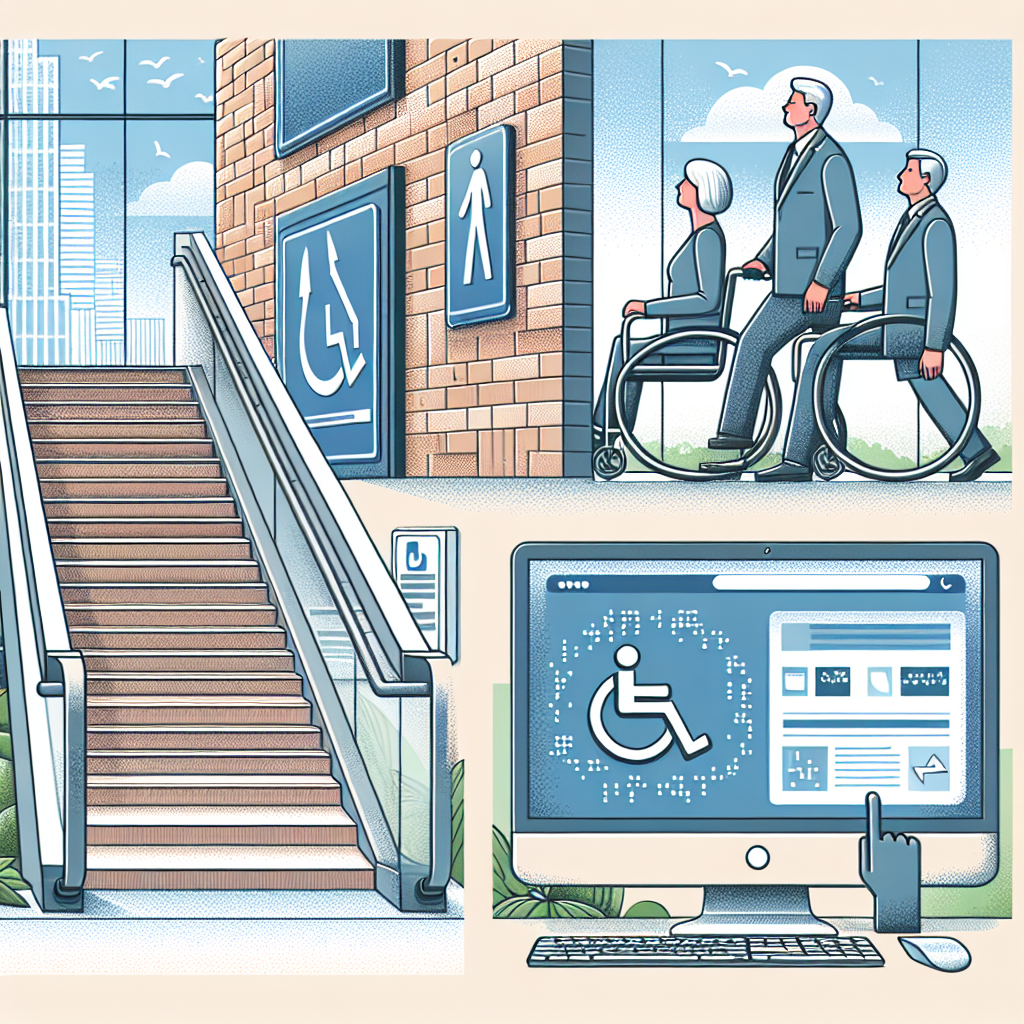
Key areas of compliance:
– Physical accessibility: Follow the 2010 ADA Standards for Accessible Design (e.g., parking, routes, ramps, doors, restrooms, seating, signage).
– Policies and practices: Modify policies as needed; provide reasonable accommodations and effective communication.
– Digital accessibility: Make websites/apps perceivable, operable, understandable, and robust (alt text, captions, keyboard access, color contrast, forms/errors). Use WCAG 2.1 AA.
– Communication aids: Interpreters, captioning, accessible documents, relay services.
– Training and ongoing maintenance: Staff training, procurement of accessible tech, regular audits.
Enforcement:
– EEOC enforces Title I; DOJ enforces Titles II–III; FCC enforces Title IV. Remedies include lawsuits, settlements, injunctive relief, and civil penalties (damages may also be available under some state laws).
Related but different:
– Section 508 (Rehabilitation Act) applies to federal agencies and their vendors; it explicitly requires WCAG 2.0 AA for ICT.
If you tell me whether you’re focused on facilities, employment practices, or website/app accessibility, I can outline concrete steps and checklists for your situation.